
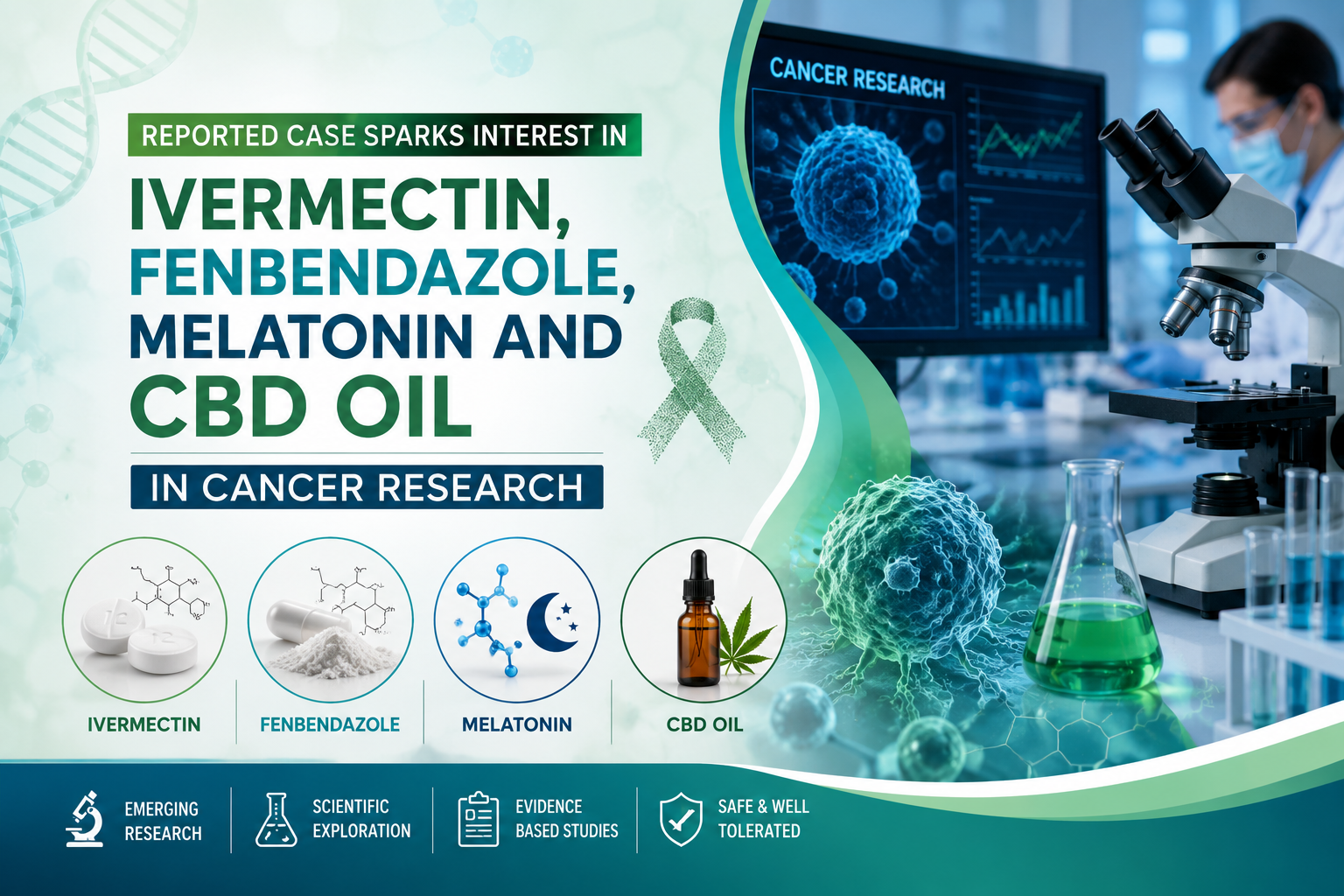
Reported Case Sparks Interest in Ivermectin, Fenbendazole, Melatonin and CBD Oil in Cancer Research
Introduction
Interest in repurposed medicines continues to grow among patients, caregivers, and researchers looking for new approaches in cancer care. Over the past few years, drugs such as Ivermectin and Fenbendazole have attracted attention online due to reports from individuals who claim to have experienced positive outcomes while using these compounds alongside conventional medical treatment.
One recently shared case involved a 67-year-old woman from Pennsylvania who was reportedly diagnosed with Stage 4 Small Cell Lung Cancer. According to the report, imaging scans showed disease progression before a combination of therapies was introduced. Months later, the patient was said to have achieved a cancer-free status, leading to renewed discussions about the role of repurposed medicines in ongoing cancer research.
While such stories generate significant interest, it is important to understand that individual reports do not establish medical proof. However, they do contribute to conversations that encourage further scientific investigation.
Understanding Small Cell Lung Cancer
Small Cell Lung Cancer (SCLC) is considered one of the more aggressive forms of lung cancer. It tends to grow rapidly and may spread to other areas of the body within a relatively short period of time.
Common treatment options include:
- Chemotherapy
- Radiation therapy
- Immunotherapy
- Targeted therapies for eligible patients
- Supportive care and symptom management
Despite advances in treatment, researchers continue searching for additional therapies that may improve patient outcomes.
Growing Interest in Repurposed Drugs
Repurposed drugs are medications originally developed for one condition but later investigated for potential use in another.
Examples frequently discussed in cancer research communities include:
- Ivermectin
- Fenbendazole
- Mebendazole
- Metformin
- Melatonin
Researchers are interested in these compounds because many have already been studied extensively for safety in their approved uses.
The Reported Case
According to publicly shared information, a 67-year-old woman diagnosed with Stage 4 Small Cell Lung Cancer reportedly experienced disease progression before beginning a combination approach that included:
- Ivermectin
- Fenbendazole
- Melatonin
- CBD Oil
- Ongoing oncology supervision and treatment adjustments
Approximately eight months later, the report claimed that the patient achieved a cancer-free status.
The case gained attention because the patient was reportedly connected to a medical family, increasing interest among individuals following developments in repurposed-drug research.
Why Such Cases Receive Attention
Stories like this often spread quickly because they offer hope to patients facing difficult diagnoses.
Several factors contribute to public interest:
1. Existing Drug Availability
Many repurposed medicines are already known to healthcare professionals and have established histories in other medical applications.
2. Ongoing Scientific Investigation
Researchers worldwide continue examining whether certain compounds may influence cancer-related pathways.
3. Patient Experiences
Many individuals share personal stories online regarding their treatment journeys, creating communities focused on discussing emerging research.
Ivermectin and Cancer Research
Ivermectin is widely known as an antiparasitic medication. In recent years, laboratory studies have explored whether it may affect certain biological mechanisms associated with cancer cells.
Researchers have investigated areas such as:
- Cell signaling pathways
- Tumor growth mechanisms
- Cancer stem cells
- Immune system interactions
Although laboratory findings have generated interest, additional clinical research is needed to determine whether these observations translate into meaningful outcomes for cancer patients.
Fenbendazole and Cancer Discussions
Fenbendazole is commonly used in veterinary medicine and has gained attention through numerous online discussions and patient testimonials.
Researchers and patient communities have discussed possible mechanisms involving:
- Microtubule disruption
- Cellular metabolism
- Tumor growth pathways
However, large-scale human clinical evidence remains limited, making further research important.
Melatonin and Cancer Research
Melatonin is best known for its role in regulating sleep cycles.
Scientists have also investigated potential effects related to:
- Antioxidant activity
- Immune system regulation
- Inflammation control
- Supportive care during cancer treatment
Research continues to evaluate how melatonin may fit into broader oncology strategies.
CBD Oil and Supportive Care
CBD Oil has attracted attention for its potential role in supportive care.
Patients have reported interest in CBD for:
- Quality of life support
- Sleep improvement
- Stress management
- Symptom relief
Healthcare professionals generally recommend discussing CBD use with qualified medical providers to avoid interactions with other treatments.
The Importance of Scientific Research
Individual cases can inspire further study, but they do not provide the same level of evidence as controlled clinical trials.
Researchers typically evaluate:
- Safety
- Effectiveness
- Dosage
- Long-term outcomes
- Patient selection criteria
Only through rigorous research can scientists determine whether a treatment consistently benefits patients.
Why More Research Is Being Requested
Advocates of repurposed-drug research often argue that promising compounds deserve additional investigation.
Supporters believe further studies may help answer questions such as:
- Which patients may benefit?
- What doses are appropriate?
- How do these compounds interact with existing therapies?
- Are outcomes reproducible in larger populations?
These questions remain important areas for future research.
Looking Ahead
The growing interest in repurposed medicines reflects a broader desire to expand treatment options and improve outcomes for patients facing serious illnesses.
Reported cases involving Ivermectin, Fenbendazole, Melatonin, and CBD Oil continue to generate discussion among researchers, healthcare professionals, and patient communities. While such reports cannot establish effectiveness on their own, they often encourage additional scientific exploration.
As research evolves, patients and caregivers should stay informed through qualified healthcare professionals and evidence-based medical guidance.
Conclusion
The reported case of a Pennsylvania woman with Stage 4 Small Cell Lung Cancer has contributed to ongoing conversations surrounding repurposed medicines and cancer research. While the outcome described in the report has attracted significant attention, further scientific investigation is necessary to understand the potential role of these compounds in oncology.
Continued research, clinical evaluation, and open scientific discussion will ultimately determine how repurposed drugs may contribute to future cancer care strategies.
Add a review
Your email address will not be published. Required fields are marked *